GET OUR FOUNDER'S LATEST BOOK:
Disrupt Your Now: The Successful Entrepreneur's Guide to Reimagining Your Business & Life

Join Lisa every Tuesday at 7pm Eastern for her live show on Facebook & YouTube.
Poor usability costs more than simple, well-designed usability
We've all heard the saying "beware the cost of the lowest price," and this also applies in design. The best option doesn't necessarily have the highest price, but often the lowest priced option has the highest cost. "How?," you ask... Let me share an experience I had today, and how poor usability cost Walmart a sale. Add enough of these sales up and it could be a substantial chunk of change, even for a company of that size.
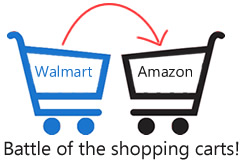 First off, remember that price is the sticker price of an item but true cost is arrived at by combining that price with what you stand to lose in sales, time, goodwill, efficiency, etc.
We needed an item for the office that wasn't available locally so I decided to order online. I was on the road and a quick search on my phone gave the exact item I wanted for $99 at Walmart's online store. Being in a hurry, I was prepared to order without shopping around. The problem arose with the poor design of their mobile checkout process and Walmart's sale became Amazon's sale.
I chose the free "ship to store" option but in the next step found that the item wouldn't arrive until near the end of the month; the initial shipping options step didn't show the prices of the various paid options, so I went back to change to standard shipping to check the price & see how much quicker I could get it. The mobile checkout process didn't have the option of changing the shipping choice after it had been selected. I couldn't even select a new choice if I deleted the item from the cart and then re-added it.
Not to be deterred, I deleted the item from the cart again, closed Safari, and cleared the cookies in the iPhone settings. Surely that would clear the shipping choice - but no joy. Exasperated, I left the site, did a new search, and found the same item on Amazon for $30 less. The net effect of poor usability in the checkout process cost them a $100 sale and saved me $30 by prompting me to look elsewhere (something I should have done anyway but since I was in a hurry and their price was reasonable I was willing to risk paying more).
The exact same product was being sold at both stores. The only reason I found the item on Amazon - at a lower price to me - was that the poor user experience during checkout pushed me away.
Design isn't just making things look pretty. It's making sure things work like they should when they should. After all, often that's the only difference between your product and a competitor's. When you're weighing the cost of your next design project, make sure to consider the true cost. Not only should it look nice but functionality should also be tested in every way possible, using different buyer personas, to try to anticipate customer problems and find proactive solutions.
In presenting options to our clients there will usually be a range of prices for various solutions. We're happy to explain the price differences and whether saving on price may actually end up costing you. Sometimes the differences may be aesthetic, but many times the higher priced solution will cost less over time through more in-depth testing, or by creating a more efficient workflow, establishing a foundation you can build upon later, contributing to happier customers, or communicating your message more effectively.